
Vishvas News Analysis: ₹23000 Crore Loss In 2024, Digital Arrest Will Be The Face Of Cyber Fraud In 2025
- By: Sharad Prakash Asthana
- Published: Dec 31, 2025 at 04:14 PM
- Updated: Jan 6, 2026 at 12:21 PM


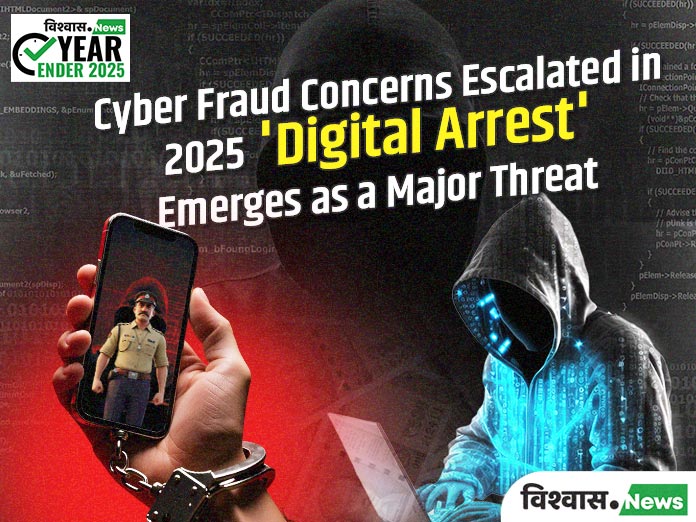
New Delhi (Sharad Prakash Asthana). In October 2024, during his ‘Mann Ki Baat’ address, Prime Minister Narendra Modi expressed deep concern about the increasing number of cyber scams, particularly the ‘digital arrest’ scam. This concern is justified, as the year may have changed, but the cybercrime graph and the threat of ’digital arrest’ remain unchanged. Meanwhile, after the Pahalgam Attack this year, several sectors of the country faced cyber attacks.
What do NCRP figures say?
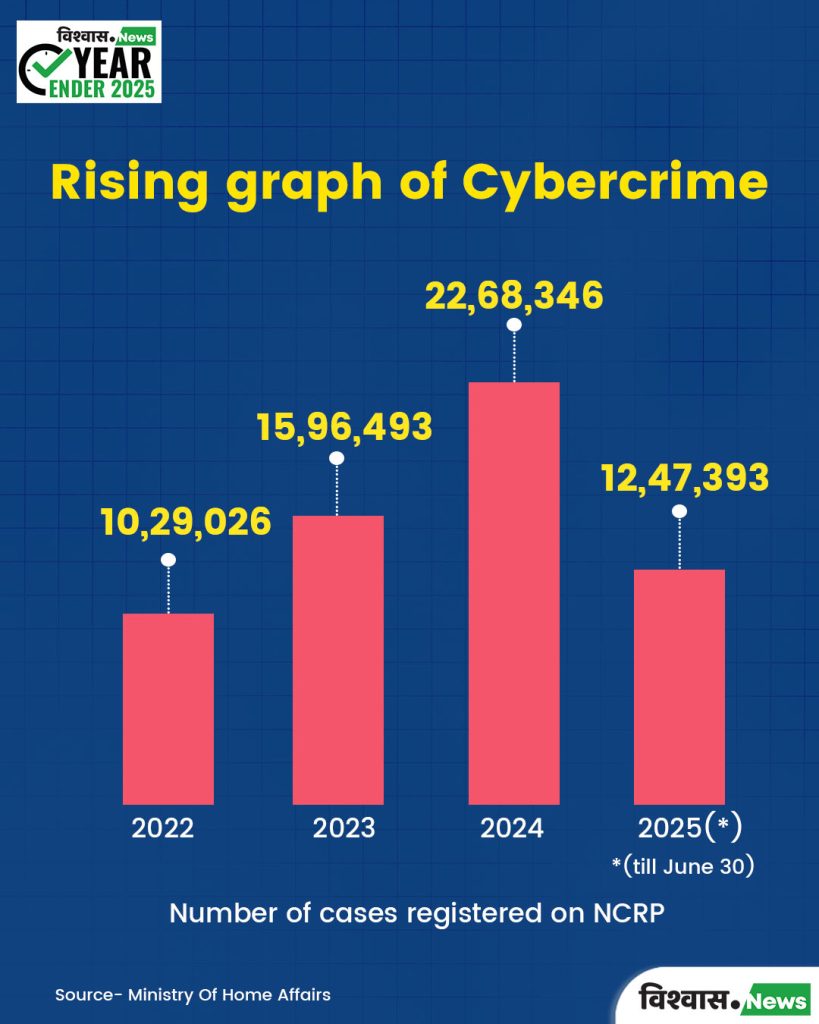
More than 1 million cases were registered on the National Cyber Crime Reporting Portal (NCRP) in 2022. This increased to nearly 1.6 million in 2023 and over 226.8 thousand in 2024. There was a 42% increase in cases in 2024 compared to 2023. Now, looking at the data recorded in the first six months of 2025, i.e., June 30, 2025, approximately 124.7 million cases were reported on the NCRP nationwide from January to June 2025.
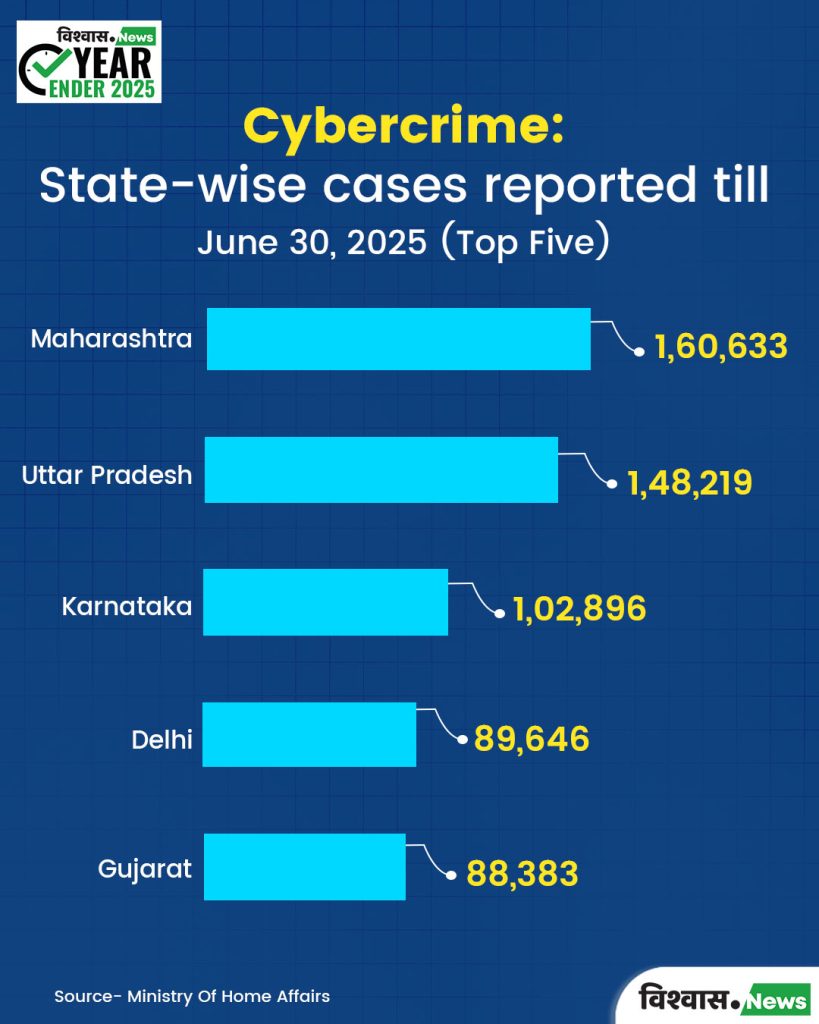
Of these, Maharashtra had the highest number of cases at approximately 1.6 million. This was followed by Uttar Pradesh (14.8 million), Karnataka (10.2 million), Delhi (89,646), and Gujarat (88,383).
Economic losses increased rapidly
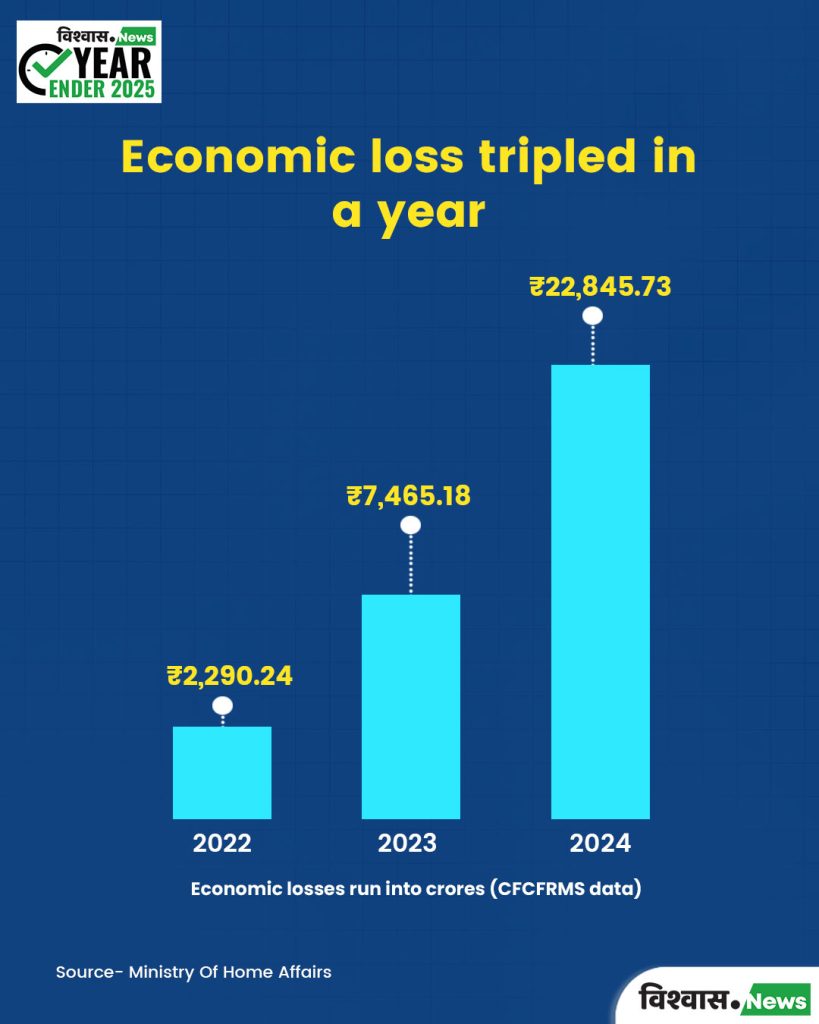
In 2024, cyber financial fraud in India cost people ₹22845 crore. Financial losses recorded through the Citizen Financial Cyber Fraud Reporting and Management System (CFCFRMS) increased sharply. Losses exceeded ₹2000 crore in 2022 and ₹7000 crore in 2023. This figure tripled in 2024. In 2024, cyber fraud cost people approximately ₹23000 crore.
520 crores siphoned off through digital payments
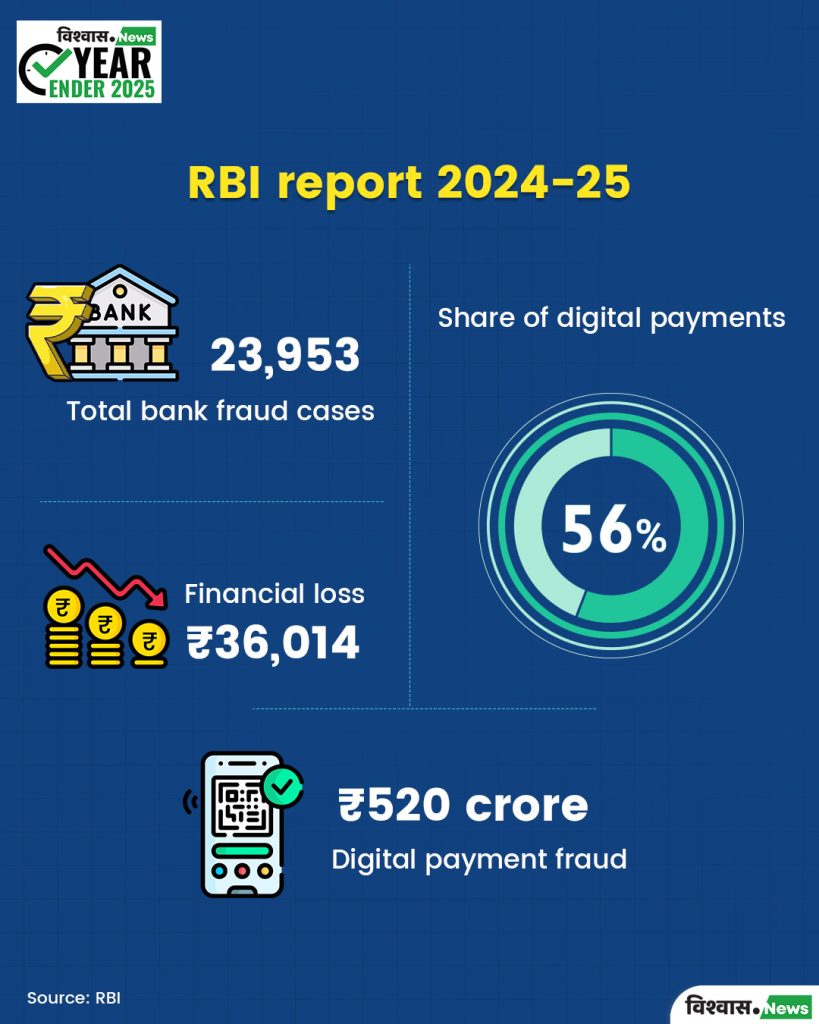
The Reserve Bank of India (RBI) report for 2024-25 states that approximately 24000 cases of bank fraud were reported across the country during this period, resulting in losses of approximately ₹36000 crore. Of these, fraud involving card/internet, i.e., digital payments, accounted for 56.5%. Of these, fraudsters siphoned off ₹520 crore.
A US report shows a glimpse of the world
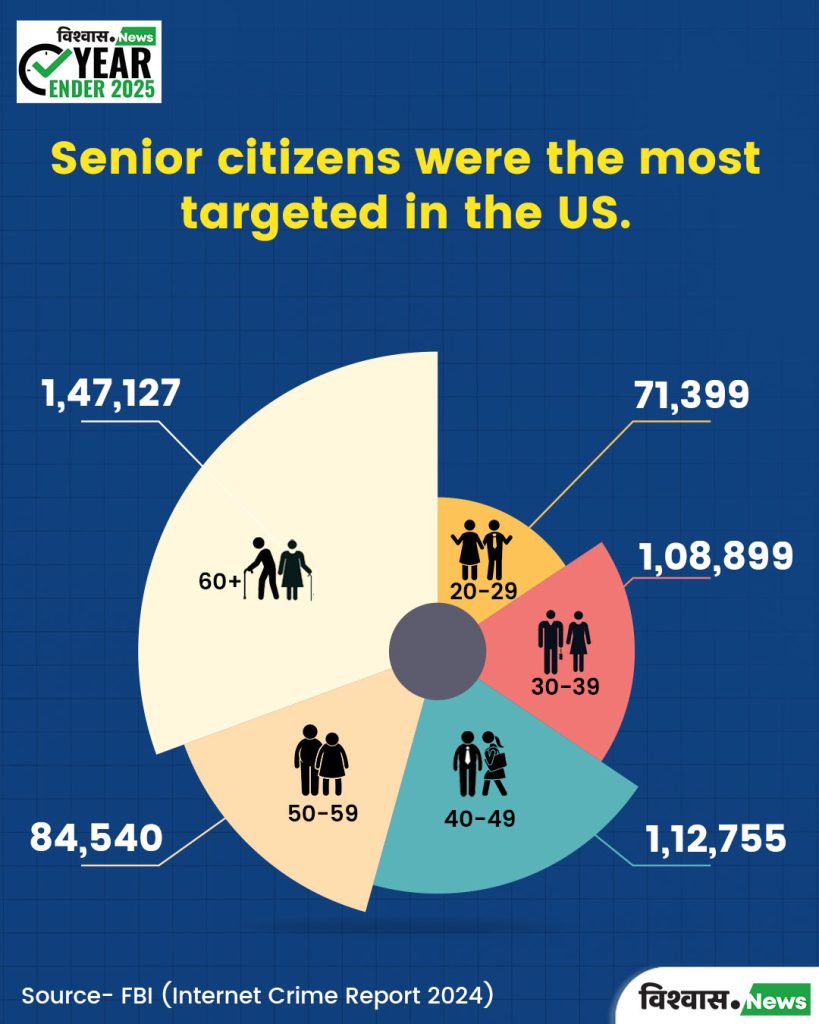
The Internet Crime Report 2024 from the Federal Bureau of Investigation’s Internet Crime Complaint Center (IC3) provides detailed information about cybercrimes committed in the US, reflecting the global trend. According to the report, in 2024, 859,532 cases resulted in losses of $16.6 billion. Of these, nearly 150,000 complaints were filed by senior citizens, i.e., those over 60, followed by those aged 40-49 (112,755) and 30-39 (108,899). According to the report, phishing/spoofing accounts accounted for the most cases. Furthermore, fraud was perpetrated through scams such as extortion, personal data breaches, investment, tech support, confidence/romance, and credit card scams.
Death lost in ‘digital arrest’, showing fear of Delhi blasts
The concern expressed by PM Modi in his ‘Mann Ki Baat’ address regarding the ‘digital arrest’ scam is justified. In this type of fraud, scammers, posing as ED, CBI, police, or cyber police officers, threaten people with the misuse of their documents or the possibility of their family members being caught in a serious case, and then force them to remain confined in a room. During this time, they are also asked not to contact anyone. In this way, cyber criminals digitally detain people for several days, while also monitoring the victims via video.
Numerous cases of such scams have been reported across the country, some of which have even resulted in fatalities. In September 2025, a similar case occurred in Hyderabad. There, a female medical officer was threatened and harassed by cybercriminals under the guise of ‘digital arrest’. She was contacted by cybercriminals on September 5 and died of cardiac arrest on September 8. After her death, her phone continued to receive messages.
Following the Delhi bombings on November 10, 2025, cybercriminals are posing as the National Investigation Agency (NIA) or the Anti-Terrorist Squad (ATS) to scare people. One such case has emerged from Kanpur.
The number of ‘digital arrests’ and related crimes has increased.
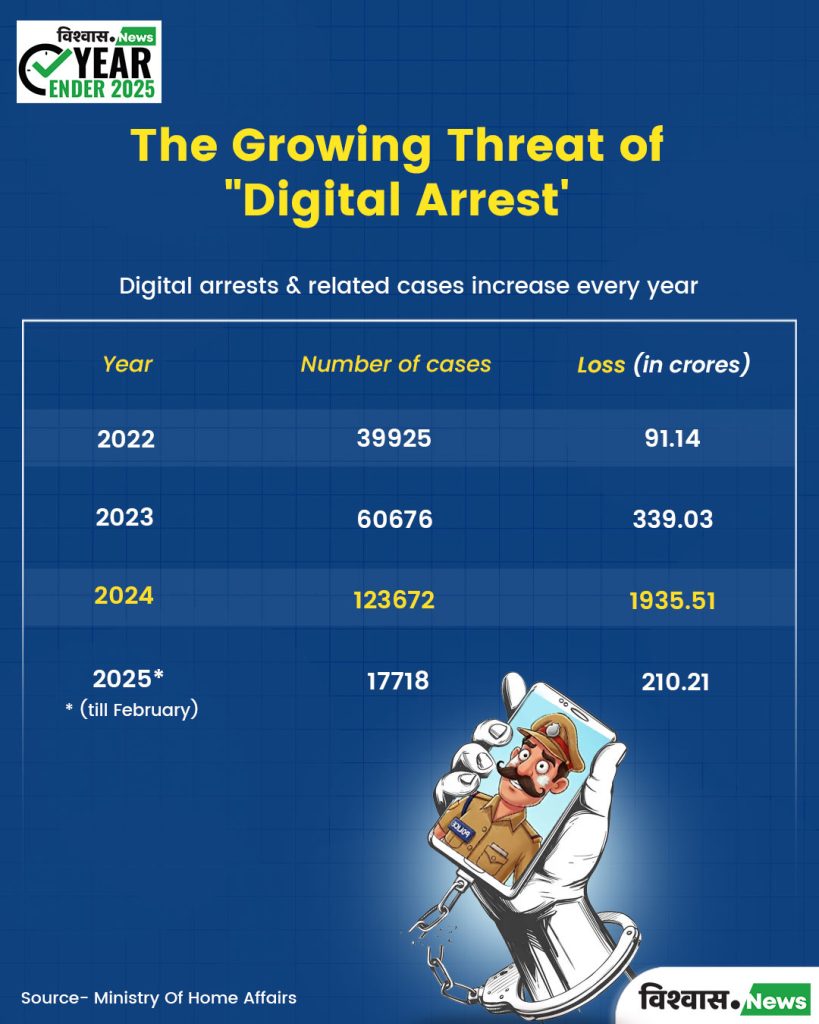
Statistics show that the number of ‘digital arrests’ and related crimes on the NCRP portal has increased over the past three years. In 2022, this number was 39925, which increased to over 60000 in 2023. After this, it reached nearly 1.25 lakh in 2024. By February 2025, more than 17000 such cases had been registered. Now let’s discuss how much money criminals defrauded in such scams. In 2022, people lost approximately 91 crore rupees due to such fraud, and in 2023, it was around 339 crore rupees. In 2025, this figure reached approximately 2000 crore rupees, while by February 2025, people were defrauded of approximately 210 crore rupees.
Millions of cyber attacks after the Pahalgam attack
Following the Pahalgam terrorist attack on April 22, the Indian Army launched Operation Sindoor on May 7, targeting terrorist bases in Pakistan and Pakistan-occupied Kashmir (PoK). During this period, cyber attacks also occurred in several sectors of India. Maharashtra Cyber identified seven Advanced Persistent Threat (APT) groups responsible for launching more than 1.5 million cyberattacks targeting critical infrastructure websites across the country after the Pahalgam attack. Of these, only 150 attacks were successful. The ‘Road of Sindoor’ report detailed these attacks. These cyberattacks originated from Bangladesh, Pakistan, the Middle East, and an Indonesian group. These attacks did not stop even after the ceasefire.
The hackers used malware campaigns, Distributed Denial-of-Service (DDoS) attacks, and GPS spoofing. The report also stated that these groups falsely claimed to have hacked India’s banking system and caused power outages.
Types of Cyber Fraud
Cryptocurrency crimes: In these, cybercriminals induce the victim to invest in cryptocurrency through phishing or investment fraud.
Cyberterrorism: Cyberattacks are carried out to cause unrest or terror within a country. This includes hacking, data theft, system shutdowns (DDoS attacks), and planning operations through the internet.
Hacking: Gaining unauthorised access to an account or system. This is often done with the intent of stealing user information, causing harm, or gaining control over the system. Phishing is used for this purpose.
Online and Social Media Related Crimes: This type of cyber crime includes crimes like cyber bullying/stalking/sexting, email phishing, online job fraud, identity theft and online matrimonial fraud.
Online Financial Fraud: This includes debit/credit card fraud/SIM swap fraud, demat/depository fraud, e-wallet-related fraud, vishing, internet banking-related fraud, and UPI fraud.
Ransomware: Cybercriminals remotely hack and encrypt computer systems and demand a ransom in exchange for the return and/or non-leakage of data. These attacks target individuals and organisations.
Trends
Cyber fraud is no longer limited to one method. Criminals are using different methods to defraud people. These methods frequently change according to new technologies and user behaviour. The ED’s 2024-25 report details such cyber crimes.
Pig Butchering: This is a hybrid of a romance scam and an investment scam. Cryptocurrency investments are typically targeted. A scammer gains the trust of a victim they meet online (on a dating app) and then persuades them to use a private messaging service/app. They then trick the victim into investing, resulting in the deception of the user. After the scam, the scammer disappears, leaving the user financially defrauded.
Phantom Hacking: Also known as the phantom hacker scam, this is a new form of tech support scam that specifically targets elderly citizens. It has been identified as a growing threat. In this scam, fraudsters scare people by claiming that their computer or bank account has been hacked. Then, posing as tech support, bank employees, or government officials, they ask the user to download software. This gives the hackers access to the system, which they use to cause financial loss to the victim.
Digital Arrest Scam: Fraudsters posing as Enforcement Directorate (ED), CBI, NIA, ATS, or police officers contact users and accuse them of a fabricated crime. The terrified victim is then asked to pay a large sum of money. The victim is then ‘digitally arrested’ for several days and defrauded.
Illegal online gaming, betting and gambling: These include unauthorised online betting platforms that entice users to gamble on sports or casino-style games.
Instant loan apps: In this type of scam, cybercriminals target poor people or students. They lure users into downloading these apps with the promise of instant loans. They then steal the user’s photos and other data using the permissions of other apps. These images are then edited, and the user is blackmailed.
Spoofing: This is used in many types of cyberattacks. In this, hackers or systems (such as banks, friends, or websites) pretend to be genuine, attempting to steal personal information or inject malware into the system. This involves using fake emails and fake websites. Hackers can also manipulate GPS signals (GPS spoofing). In this, fraudsters can use fake caller IDs to pose as trusted entities, such as banks and obtain sensitive information.

Steps against cybercrime
The Online Gaming Promotion and Regulation Bill, 2025, was passed on August 21, 2025. This law is designed to encourage e-sports and social online games, while imposing a complete ban on online money gaming, including their promotion, advertising, and financial transactions.
Regarding fake loan apps, the RBI had released a list of over 1600 digital lending apps in July 2025.
According to the ED report for the fiscal year 2024-25, the agency is investigating 122 cybercrime cases. These crimes involve proceeds of ₹20462 crore. Properties worth ₹5964 crore have been attached. A total of 96 people were arrested during the investigation.
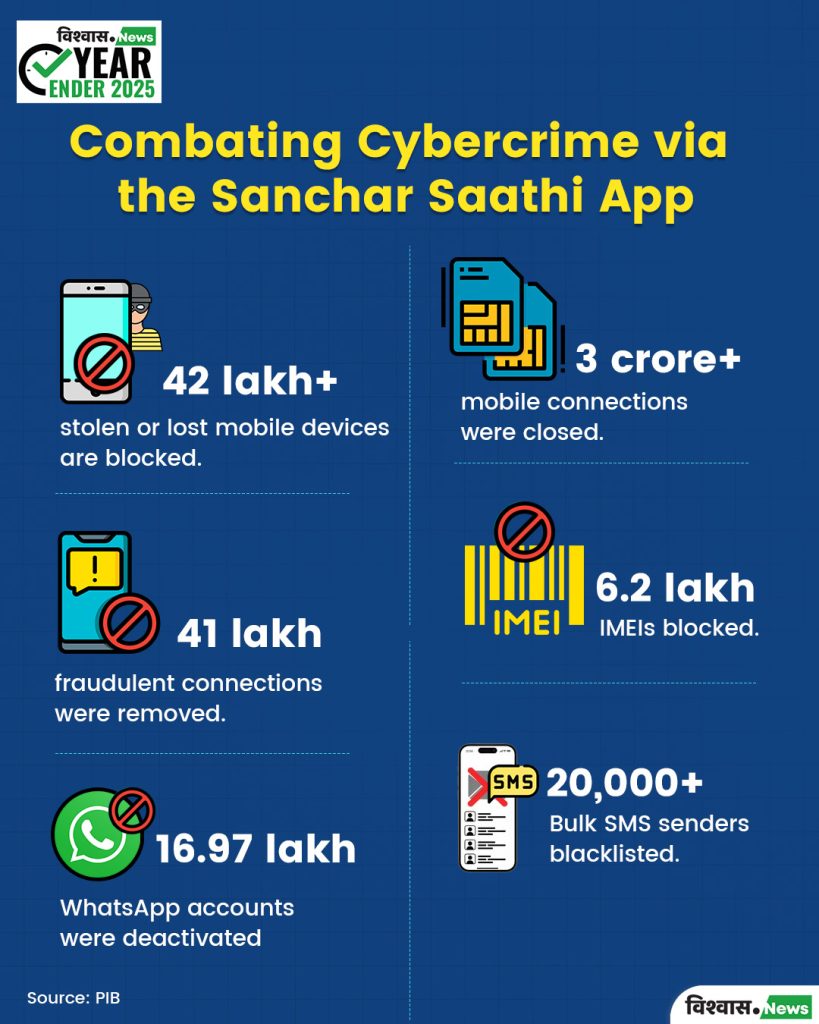
According to a PIB report released on December 2, 2025, in response to the growing threat of cybercrime, the Department of Telecommunications launched the Sanchar Saathi mobile app on January 17, 2025. Through this app, more than 4.2 million stolen or lost mobile devices were blocked. More than 30 million suspicious mobile connections were disconnected, including more than 14.3 million connections marked as ‘not my number’. Following public reports, approximately 4.1 million fraudulent connections were removed, and 620,000 IMEI numbers were blocked. Furthermore, approximately 1.7 million WhatsApp accounts were deactivated, and more than 20000 bulk SMS senders were blacklisted.
On December 1, 2025, the Supreme Court ordered the CBI to independently investigate cases related to the Digital Arrest scam. A bench headed by Chief Justice Surya Kant stated that the CBI can freeze accounts used in cybercrimes and fraud, even in the absence of an FIR.
From the cooperation portal The government issued 130 censorship notices to online platforms between October 2024 and April 8, 2025, through the Ministry of Home Affairs’ Sahyog portal, which was launched in 2024. It serves as a platform to streamline the process of removing online content.
Articles published on Vishvas News
Vishvas News published 1546 Hindi articles from January 1, 2025, to December 10, 2025. These included 61 stories on scams, 11 on financial fraud, nine on digital fraud, and one on brand safety.

As of August 2025, Vishvas News’ portal has published 397 articles under the scam category. Of these, 332 were financial fraud, and 65 were non-financial fraud. Financial scams accounted for the largest number of articles, while phishing stories were the most common.
The 2026 challenge
According to Google Cloud’s Cybersecurity Forecast 2026 report, AI-generated attacks (deepfakes, autonomous hacking) will be the biggest challenge in 2026. Furthermore, ransomware, data theft, and extortion could cause the most economic damage worldwide.


Know the truth! If you have any doubts about any information or a rumor, do let us know!
Knowing the truth is your right. If you feel any information is doubtful and it can impact the society or nation, send it to us by any of the sources mentioned below.