Vishvas News Analysis: Fake and misleading information used to mislead voters in the 2025 elections, with deepfakes being the dominant force.
- By: Ashish Maharishi
- Published: Dec 31, 2025 at 04:25 PM
- Updated: Jan 6, 2026 at 12:20 PM


New Delhi (Ashish Maharishi). The pattern of misinformation in politics has completely changed. AI-generated content and deepfakes dominated 2025, blurring the line between real and fake. This year was a highly active political year, with elections being held worldwide, a major festival of democracy. It started with the United States on January 20th with the inauguration of President Donald Trump, who won the 2024 election. Following this, in 2025, elections were held in major countries like Australia, Canada, Germany, the Philippines, Egypt, Tanzania, and Cameroon, and the public elected new governments. However, the situation was different in Bangladesh and Nepal. There, people took to the streets and protested, resulting in a change of government. Across all these areas, the widespread use of deepfakes, AI-generated content, and old or unrelated videos was significantly evident.
In the Indian context, 2025 saw a surge in politically misleading and fake information. This year saw a proliferation of deepfakes and AI-generated content. During the Delhi and Bihar assembly elections, numerous deepfakes, old videos and images of politicians and political parties were used to create confusion among voters.
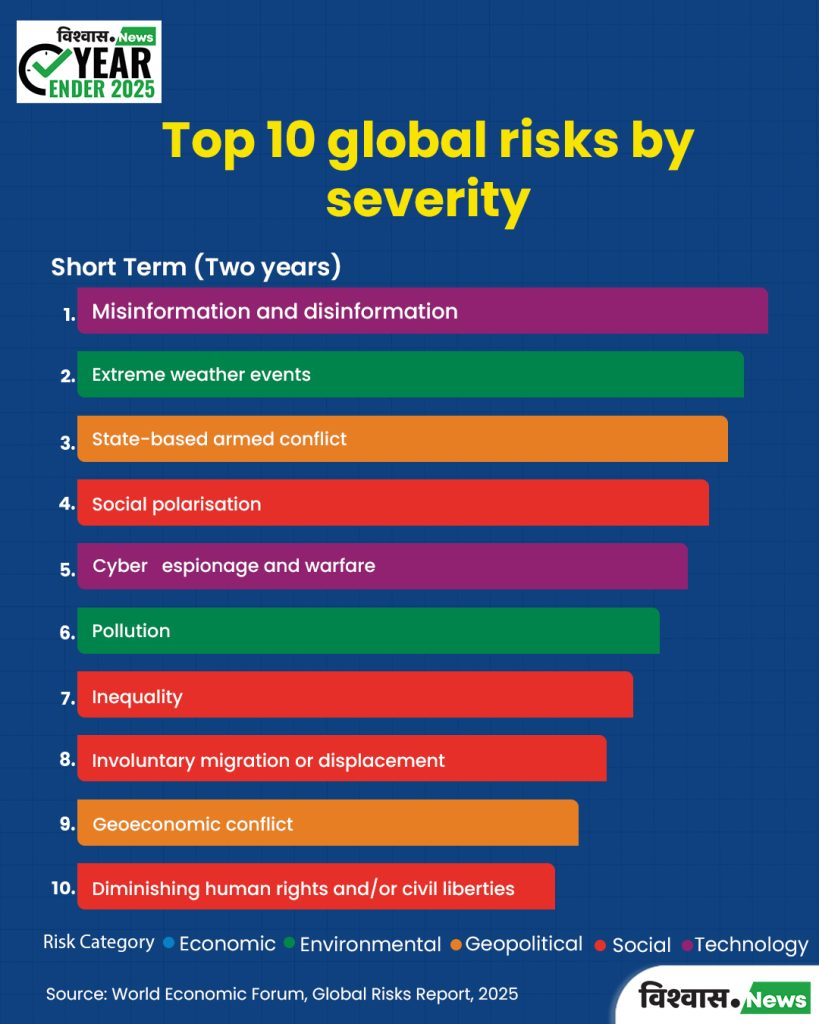
A World Economic Forum story detailed the dangers of deepfakes and their potential use in elections. Technology has significantly changed the way misinformation and disinformation are used in the 2025 elections. While fake news was once the only challenge, artificial intelligence has now further complicated matters. The World Economic Forum, in its 2025 Global Risks Report, had already warned that misinformation and disinformation would be the top challenges.
If we consider the trends in political circles in 2025, election results and the Special Voter Intensive Revision (SIR) were also much discussed, in addition to the elections themselves. The results of the Delhi and Bihar elections in India reignited the age-old debate, where opposition parties demand the use of ballot papers for elections. Furthermore, the Election Commission’s Special Voter Intensive Revision (SIR) this year also generated considerable controversy. Several BLOs died during this work. The opposition claims that the voter list survey was conducted to undermine the democratic system and deprive voters of their right to vote.
Amidst all this, the Election Commission attempted to raise voter awareness through the ‘Myth vs Reality’ campaign. Furthermore, the Election Commission (EC) issued guidelines for AI-generated content. It stated that if false AI content is posted or shared from a party’s official social media handle, it must be removed immediately within three hours of receiving a report or notice. Furthermore, all political parties must maintain records of their AI-based promotional materials. This must include the name and time of the person or organisation that created the content, so that the Commission can investigate later.
Bill to regulate deepfakes introduced in Lok Sabha
Amid the growing threat of deepfakes, Shiv Sena leader Shrikant Shinde introduced a private member’s bill in the Lok Sabha in December to regulate them. The bill’s primary objective is to ensure citizen safety by mandating prior consent from individuals depicted in deepfakes. The proposed bill aims to establish a clear law to regulate the creation, distribution, and use of deepfakes in India. It also proposes the establishment of a Deepfake Task Force, which will collaborate with academic and private sector institutions to detect manipulated content. The bill also proposes establishing a fund to support public and private sector initiatives to detect and prevent advanced image manipulation.
Meanwhile, the World Economic Forum’s (WEF) Global Risks Report 2025 identifies AI-generated disinformation (including deepfakes) as a major threat to global elections, particularly to the electoral credibility and social harmony of democratic countries. UNESCO, in its report ‘Generative AI and Elections: Addressing the Risks, Protecting Democracy’, on how generative AI (including deepfakes) can influence elections, notes an increase in political deepfake audio and video in the 2024 and 2025 elections.
Most viral claims related to Rahul Gandhi and Narendra Modi
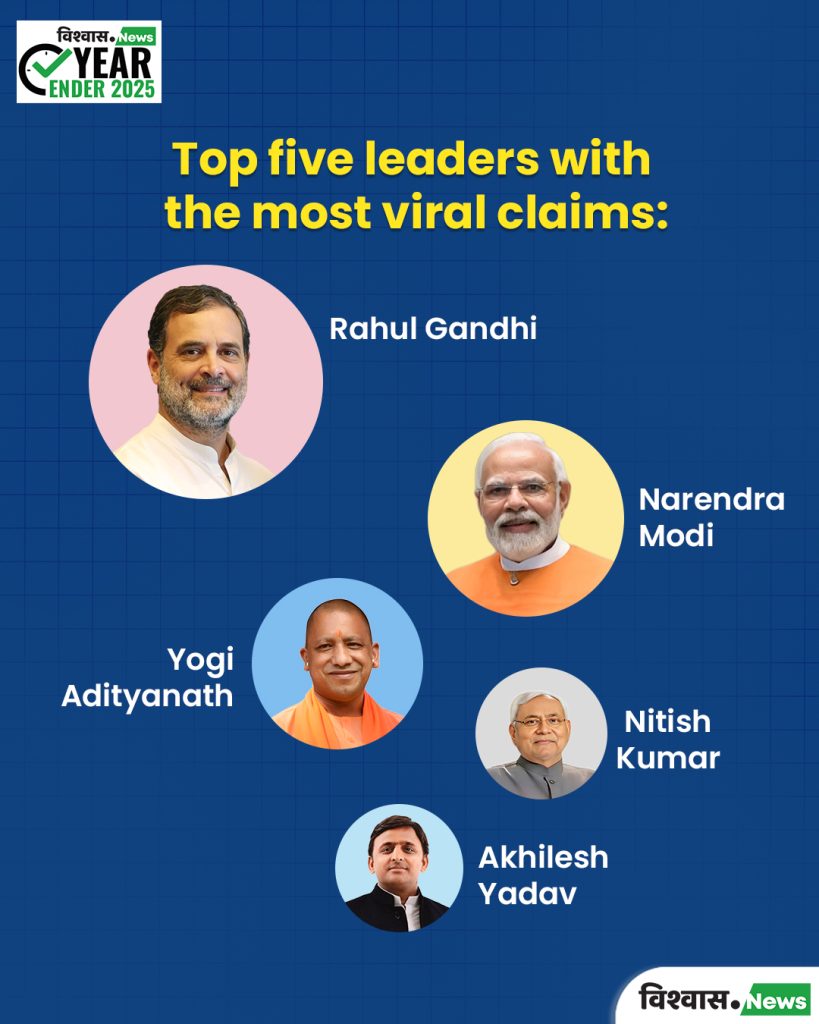
When Vishvas News analysed the news published on its website, it found that a total of 58 fact-checks were published regarding Rahul Gandhi in 2025. From the Bihar elections to the Delhi elections, Constitution Day, or any rally related to Rahul Gandhi, Rahul Gandhi was targeted in some way. During this period, 23 fact-checks regarding PM Modi were published, all of which were purely political. Similarly, lies were spread regarding Uttar Pradesh Chief Minister Yogi Adityanath. More than 20 fake and misleading social media posts related to him were investigated, including videos, deepfakes, and AI-generated content. Meanwhile, 19 lies regarding Bihar Chief Minister Nitish Kumar and 17 lies regarding former Uttar Pradesh Chief Minister Akhilesh Yadav were exposed to readers.
The danger of deepfakes can be gauged from the fact that in 2025, attempts were made to spread lies through deepfake videos of several senior leaders, including Prime Minister Narendra Modi, Home Minister Amit Shah, RJD MP Manoj Jha, and TMC MP Sagarika Ghosh. AI-generated images were used to tarnish the image of Rahul Gandhi, Sonia Gandhi, Priyanka Gandhi, and PM Modi. Images of Congress’s firebrand spokesperson Supriya Shrinate, created with the help of AI tools, went viral.
Fake/misleading news was more prevalent in the Bihar elections than in Delhi.
Whether it’s the Lok Sabha elections or the Assembly elections, misinformation and disinformation pose a significant threat to the EC, political parties, and voters. This trend was evident this year too, with Assembly elections held in Delhi, followed by elections in Bihar towards the end of the year. Not only were lies spread through traditional methods, but AI-based false content was also deployed in the electoral arena. Deepfakes were used to mislead voters and spread propaganda against candidates.
When it comes to spreading lies during elections, social media has emerged as a powerful weapon. With technological advancements, deepfake videos, AI-generated content, and edited videos are being used extensively. This year, two major elections were held in Bihar and Delhi. False claims were spread in these elections to mislead voters. Several old and unrelated videos were passed off as recent videos from Bihar, attempting to convey the impression that the public had taken to the streets against state leaders. Furthermore, false claims of victory for some candidates prior to the election were also circulated.
Vishwas News’ analysis of fact-check reports on elections confirms these trends. During the 2025 Bihar Assembly elections, videos of rallies by BJP and JDU leaders were manipulated using AI to add the slogan “Vote Chor, Gaddi Chhod” (vote thief, leave the throne). Several other deepfake videos went viral, aimed at influencing voters during the Bihar elections.
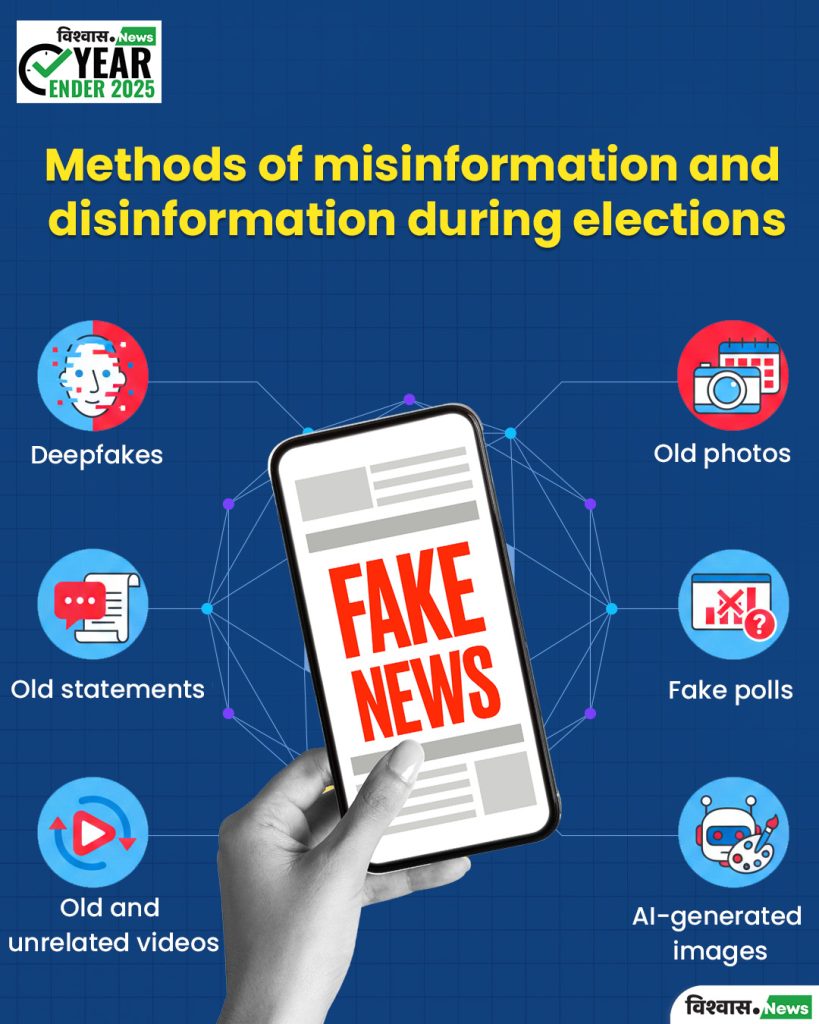
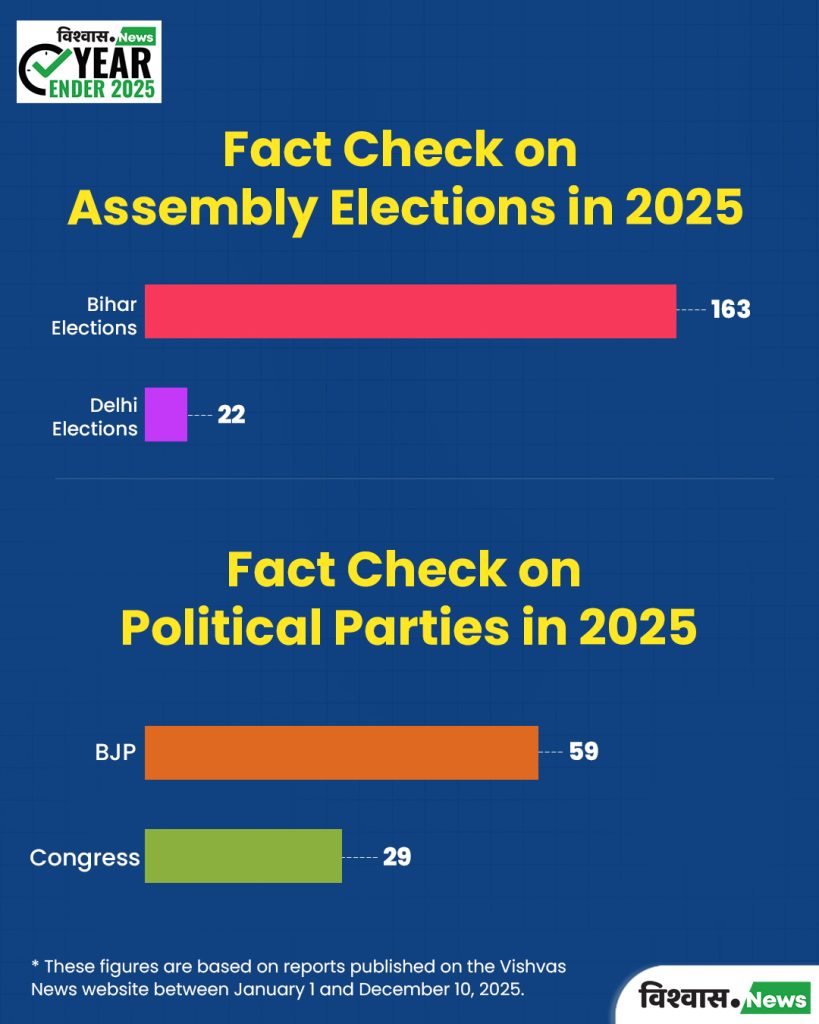
If we look at the statistics (based on Vishvas News’ fact-check reports), Vishvas News conducted over 163 fact-checks in the Bihar elections, while the number in Delhi was only 22. This clearly shows that the Bihar elections were discussed more than the Delhi elections on social media. In the Bihar elections, sometimes fake election schedules, old videos, and pictures of politicians with unrelated claims went viral. Not only this, but fake exit polls were circulated in the name of the elections. After investigating these, Vishvas News presented the truth before its readers.
Election Commission tightens its belt
The Election Commission also geared up for the 2025 assembly elections. To this end, the Commission formally launched a section on its website with the tag ‘Myth vs Reality’.Furthermore, before the elections, all political parties were warned that some individuals were spreading misinformation on social media by creating deepfake videos using AI tools, which could taint the election environment. The tags should clearly state terms like AI-generated, digitally enhanced, or synthetic content to avoid confusion among the public. The EC also used social media extensively to alert voters.
To address such issues, the Commission has also directed all parties, their leaders, candidates, and star campaigners to ensure that any AI-generated or digitally altered content they post is clearly tagged. The tags must clearly state terms like AI-generated, digitally enhanced, or synthetic content to avoid confusion among the public. Claims related to the Congress and the BJP have been prominent.
When Vishvas News analysed its fact-check reports for 2025, it found that it had published 59 fact-checks on the Bharatiya Janata Party, while 29 fact-checks were published on the Congress party. During the Delhi elections, numerous fake videos and images were circulated on social media regarding the Aam Aadmi Party and its leaders. Vishvas News investigated these as well.
Three major challenges in the electoral context
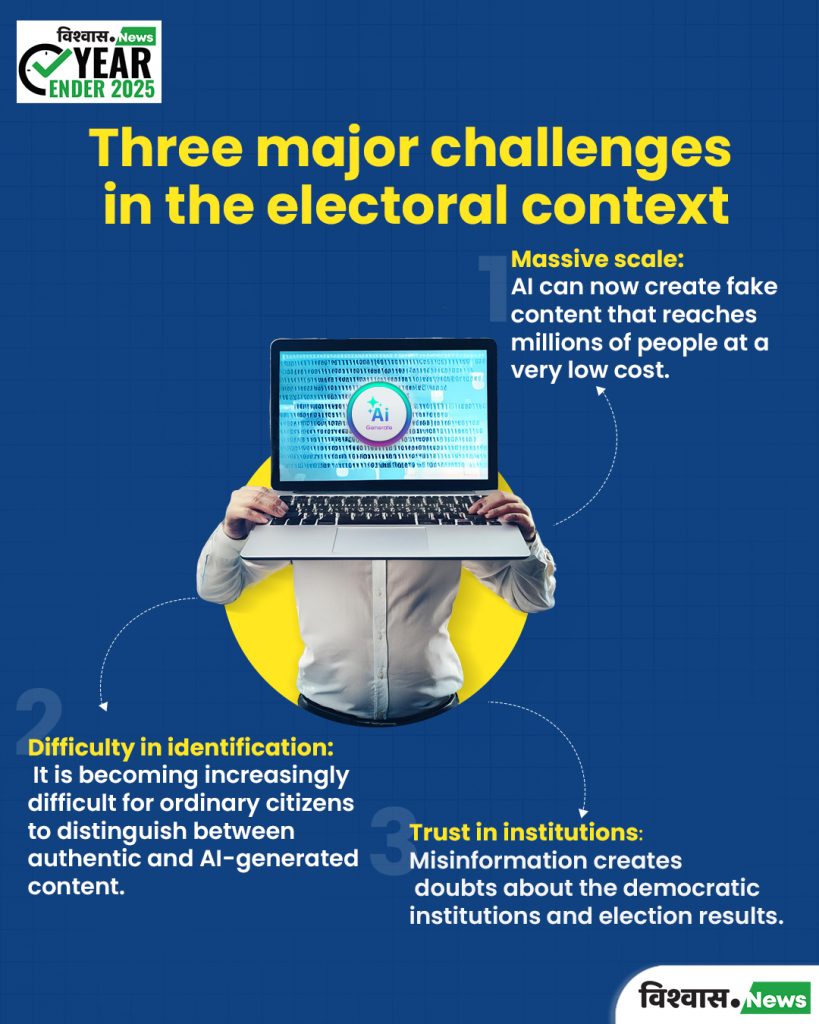
AI has significantly transformed the world of lies. While previously, irrelevant content was created by tampering with old videos and photos, AI is now generating content that is often difficult to identify. AI content can now be easily generated with just a phone click. This poses a challenge. Furthermore, the quality of AI-generated content is also improving over time, leading ordinary people to believe it to be true and then spread it virally.
According to Brookings study, the influence of the online ecosystem in shaping democratic discourse is well known. Generative artificial intelligence (AI) poses a new challenge in elections. Generative AI is capable of generating realistic images, videos, audio, or text, leading to its increased use in elections. Therefore, addressing this issue will require coordination between governments, AI companies, social media platforms, and users.
According to a report by the Observer Research Foundation, AI is a double-edged sword for a country like India, especially during elections. AI tools are used to translate political speeches into multiple languages across the country, making them accessible to as many people as possible. Furthermore, AI is also used in election-related surveys. False content is often created to defame politicians.
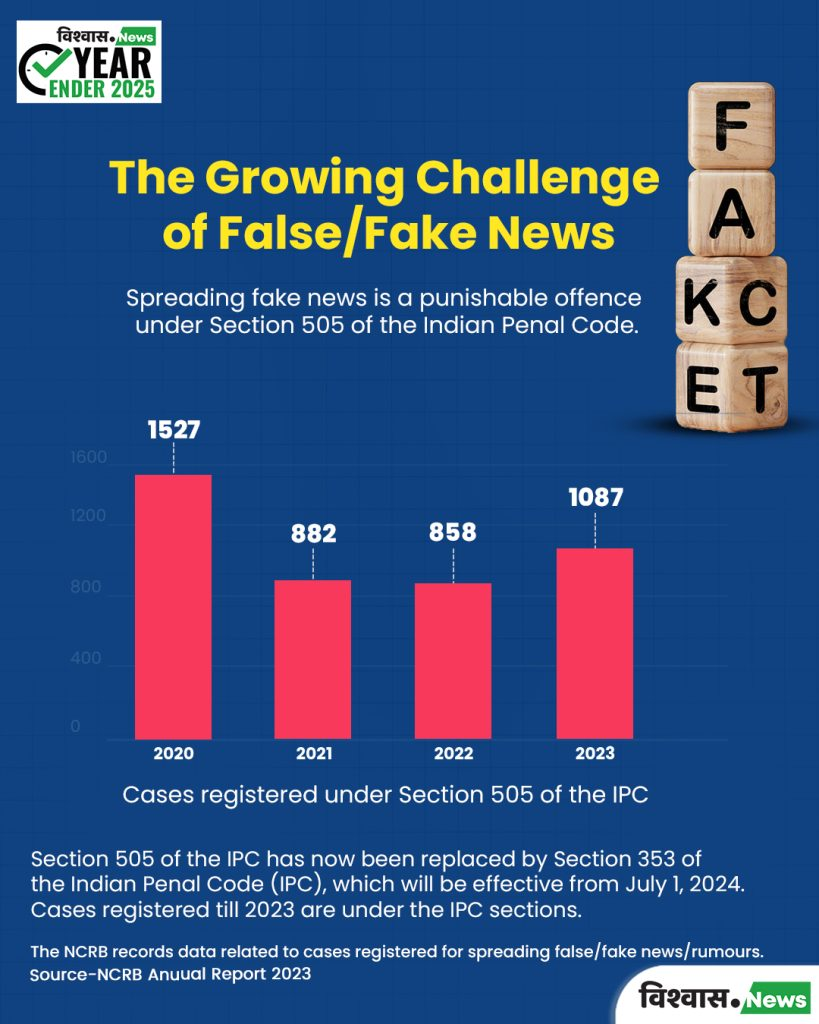
From the Election Commission to the Central Government, everyone is active in combating fake/misleading news in the country. Furthermore, continuous efforts are being made at the district and state levels to prevent misleading news. The National Crime Records Bureau (NCRB) registers cases related to false/fake news/rumour-mongering under Section 505 of the Indian Penal Code. According to the NCRB’s 2023 annual report, ‘Crime in India’, a total of 1,087 cases of false or fake news were registered in 2023, an increase of approximately 27% compared to 2022.
The UNESCO report on AI and Democracy makes several recommendations, including a focus on education and awareness to increase public understanding of AI. It also calls for a focus on dialogue rather than regulation.


Know the truth! If you have any doubts about any information or a rumor, do let us know!
Knowing the truth is your right. If you feel any information is doubtful and it can impact the society or nation, send it to us by any of the sources mentioned below.