Vishvas News Analysis: Deepfakes were the main source of misinformation in major events in 2025, and the scope of financial losses also increased.
- By: Abhishek Parashar
- Published: Dec 30, 2025 at 03:25 PM
- Updated: Dec 31, 2025 at 12:36 PM


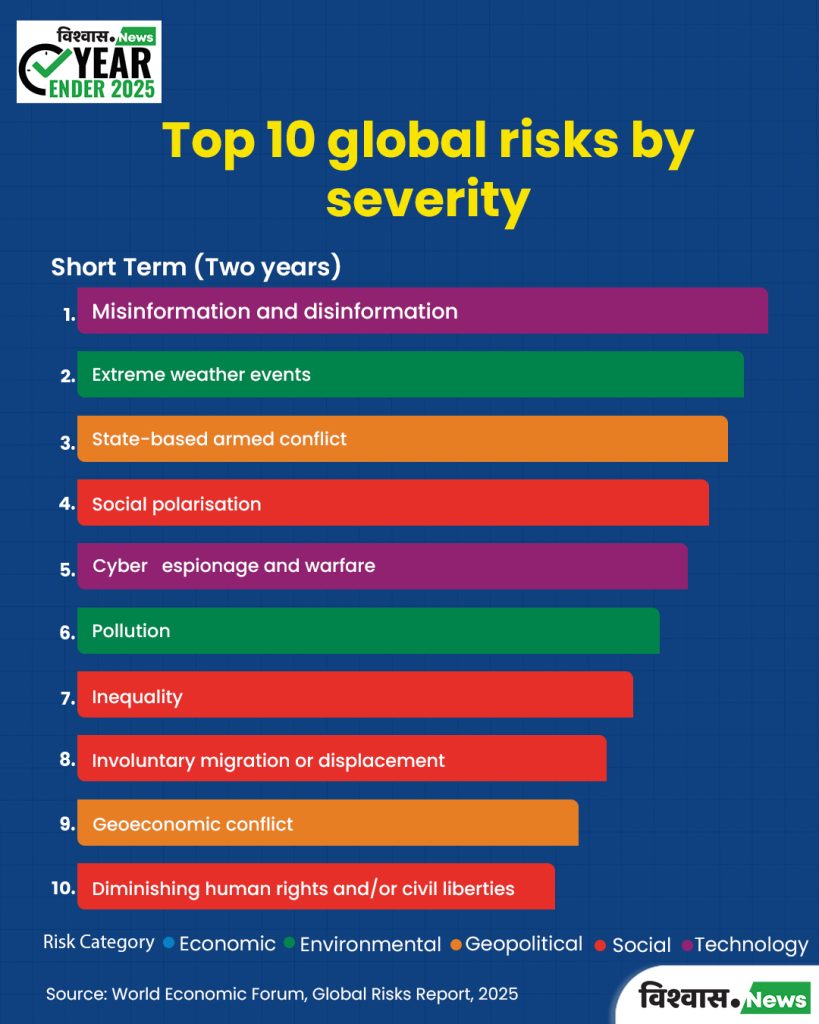
New Delhi (Abhishek Parashar). In 2025, the challenges of misinformation and disinformation not only persist, but synthetic media (deepfakes) have transformed them into a political and financial crisis. The World Economic Forum’s (WEF) Global Risks Report 2025 ranked misinformation as the top global risk in the short term (two years), while in India, its impact on national security, democratic processes, and the pockets of ordinary citizens is clearly visible.
In 2025, the use of AI and deepfake technology has emerged as a powerful weapon of information warfare in the Indian and global landscape. From major geopolitical events like Operation Sindoor and the global Israel-Iran conflict to social gatherings like the Maha Kumbh Mela, deepfake video and audio have become a major means of spreading propaganda. Furthermore, deepfake fraud is posing an unprecedented challenge to national cybersecurity, with one report estimating losses of ₹70000 crore in India alone by 2025.
The National Crime Records Bureau (NCRB) data shows that cases related to fake or false news increased by 27% in 2023. This analysis highlights how the growing scope of fake news and deepfakes poses a significant and complex challenge, despite global summits (such as the Paris AI Action Summit) to regulate AI.
Interference in the democratic process!
In many ways, 2025 emerged as a year of elections, with polls held in India as well as several other countries worldwide. Delhi Assembly elections were held in February and Bihar Assembly elections in November. Furthermore, the Vice Presidential elections were held in September. Elections were conducted in other Asian countries, including Singapore and South Korea, with several European and African countries. The 2025 elections saw a significant shift in the methods of misinformation and disinformation due to technology. While previously, fake news was the only challenge, Artificial Intelligence (AI) has now further complicated the situation.
The World Economic Forum’s (WEF) Global Risks Report 2025 identifies AI-generated disinformation (including deepfakes) as a major threat to global elections, particularly to the electoral credibility and social harmony of democratic countries. A UNESCO report also elaborates on the impact and side effects of using AI in elections.
According to a Brookings report, the countries going to the polls in 2024 represent over 41% of the world’s population and account for 42% of global GDP. “As in previous elections, the online ecosystem played a role in shaping these campaigns, but new developments have increased pressure on an already contested information space, including the rapidly advancing use of Generative AI, which allows anyone to create realistic images, video, audio, or text based on user prompts or questions.”
The National Democratic Institute (NDI) report also provides suggestions on the potential risks of AI in electoral processes and on safeguarding democracy.Reports describe how deepfakes are used to mislead voters, spread propaganda against candidates, and invalidate or render election results unreliable.
Vishwas News’ analysis of fact-check reports on elections confirms these trends. During the 2025 Bihar Assembly elections, videos of rallies by BJP and JDU leaders were manipulated using AI to add the slogan ‘Vote Chor, Gaddi Chhod’ (Vote Chor, Gaddi Chhod). Several other deepfake videos went viral, aimed at influencing voters during the Bihar elections.
The 2025 elections saw a surge in the use of AI and deepfakes. In India, particularly in the Bihar elections, a variety of misinformation was spread regarding ‘vote theft’ and the Election Commission’s SIR process. According to the World Economic Forum’s Global Risks Report 2025, electoral misinformation not only impacts election outcomes but also undermines public trust in democratic institutions.
The dangers of AI-created content in the context of electoral misinformation can be understood through three key points. First, AI can create massive amounts of fake content at very low cost. Second, it is difficult for ordinary citizens to distinguish between real and AI-created content. Third, persistent misinformation threatens to erode public trust in democratic institutions and election results.
Not only misinformation, but financial loss also.
There has been a massive increase in both the number of deepfake content and the financial losses it causes, posing not only a significant challenge for fact-checking but also a much wider scope of financial losses. According to a report by the World Economic Forum (WEF), AI-driven impersonation and cross-border scam networks have emerged as the biggest threats to the world, projecting losses of over $1 trillion by 2024.
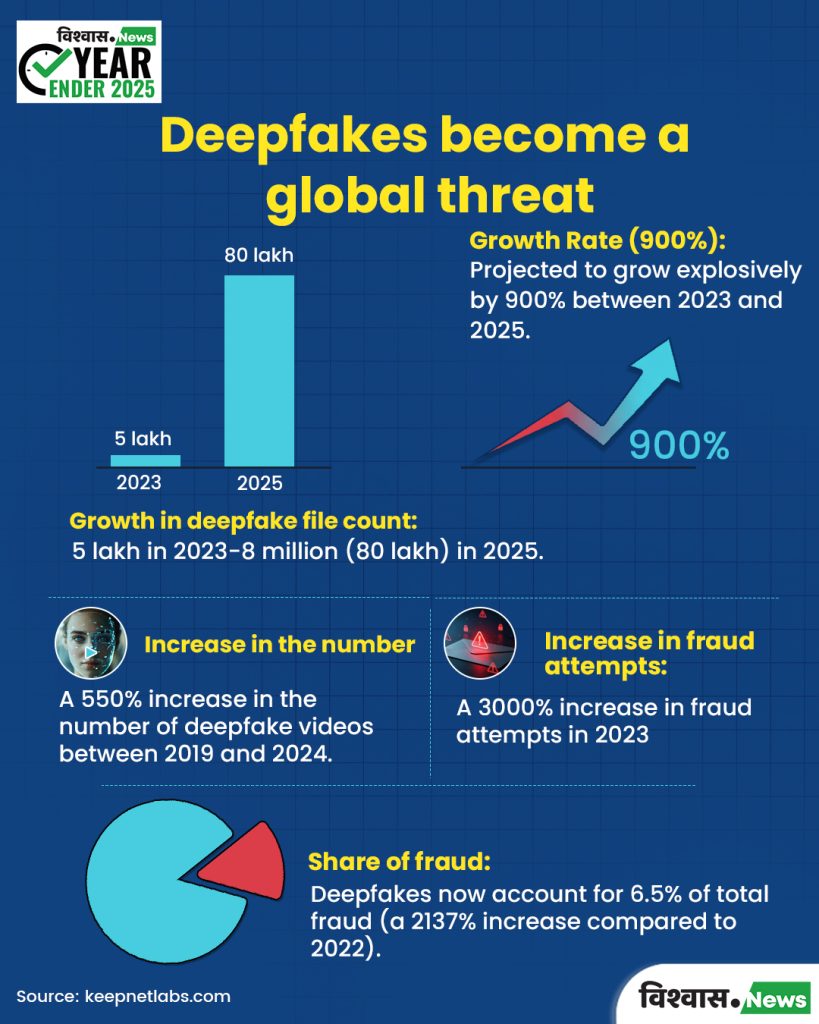
Shocking data from cybersecurity firm Keepnet Labs reveals that the number of deepfake files is projected to rise from five million in 2023 to eight million in 2025, an explosive 900% increase in just two years. Furthermore, deepfake-based phishing and fraud attempts are projected to increase by 3000% in 2023. Today, deepfakes account for 6.5% of total fraud cases, a staggering 2137% increase compared to 2022.
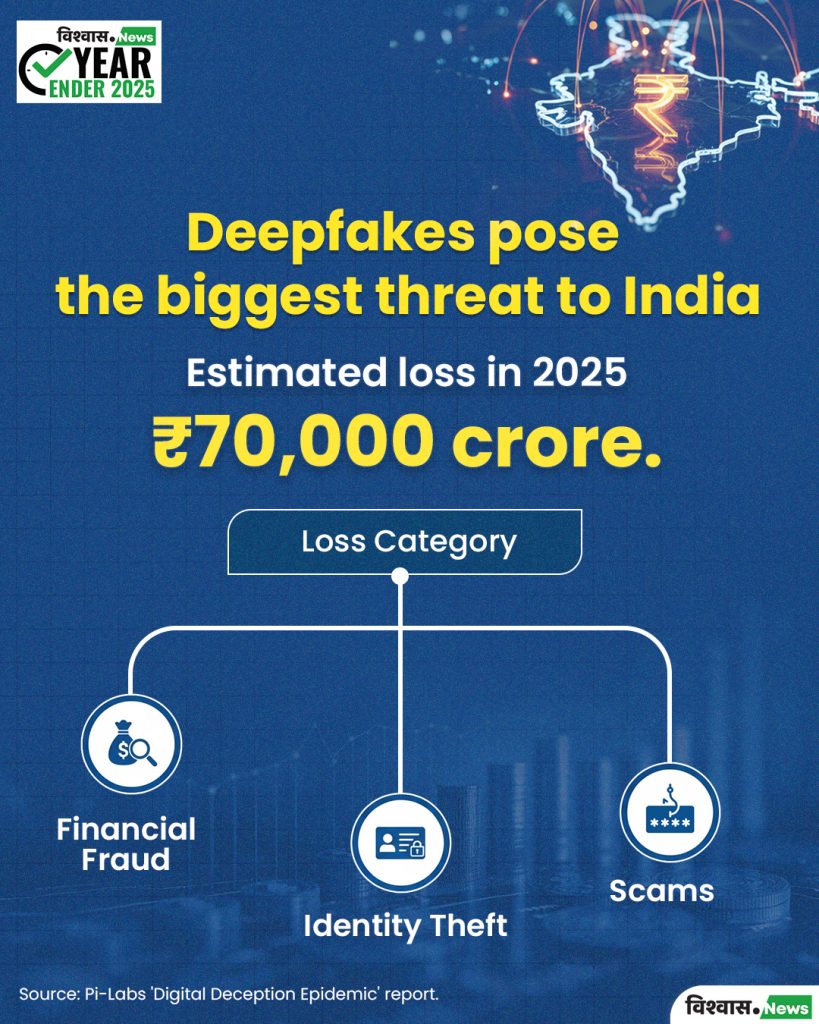
But the threat isn’t limited to this. According to Pi-Labs’ ‘Digital Deception Epidemic’ report, this threat is directly impacting India’s economy. Financial fraud, identity theft, and scams are projected to cost India alone ₹70000 crore in 2025. Meanwhile, according to Deloitte’s estimates, generative AI fraud in the US is projected to cause losses of $40 billion by 2027.
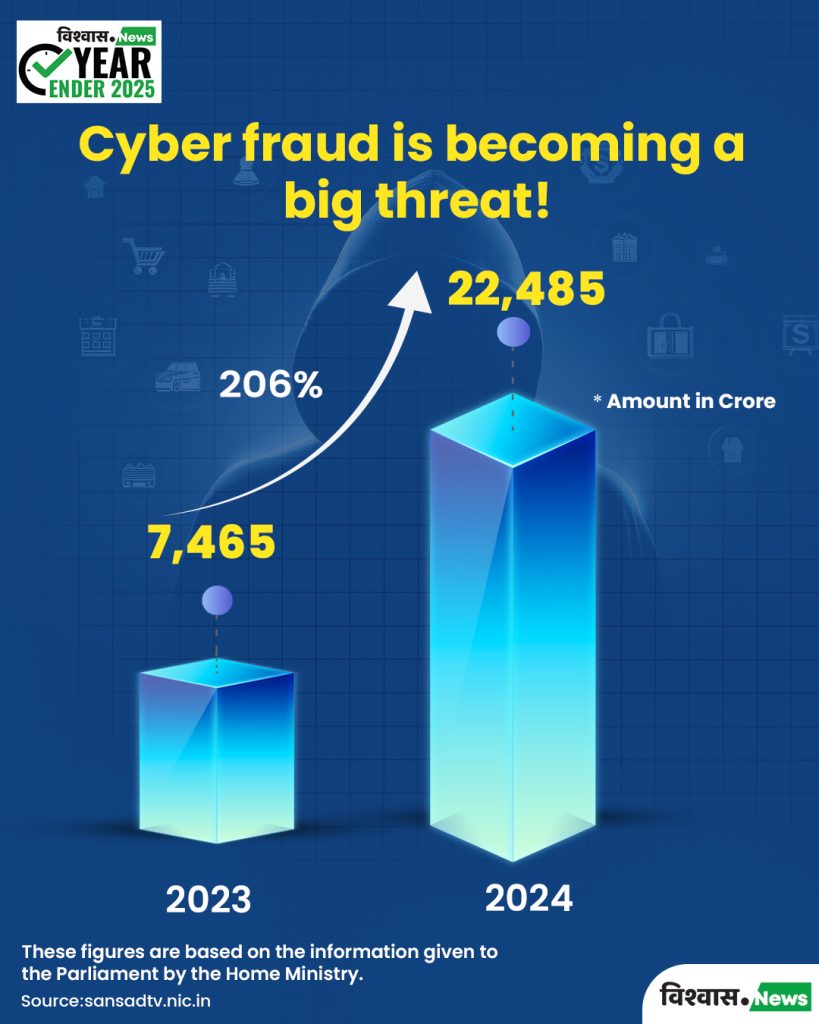
In the Indian context, digital ‘arrests’, investment scams, and fake loan apps are the most prevalent methods of fraud. Deepfakes and phishing attacks, particularly those using artificial intelligence (AI), have further compounded this threat. According to information provided by the Ministry of Home Affairs to Parliament, citizens lost approximately ₹22845 crore to cyber fraud in 2024, an increase of over 200% compared to 2023.
Deepfakes used as propaganda in ‘Operation Sindoor’
During Operation Sindoor, a widespread information war against India was witnessed on social media, with Pakistan-based social media handles systematically spreading disinformation about the military operation. This prompted the Indian government to order the widespread blocking of a large number of Pakistani social media handles.
During this period, AI-created videos of India’s Home Minister and Foreign Minister S. Jaishankar went viral, purporting to acknowledge India’s ‘defeat’ or significant ‘losses’ during the operation. Fake AI-created videos were created using the faces and voices of military officers to spread propaganda against the Indian Army.
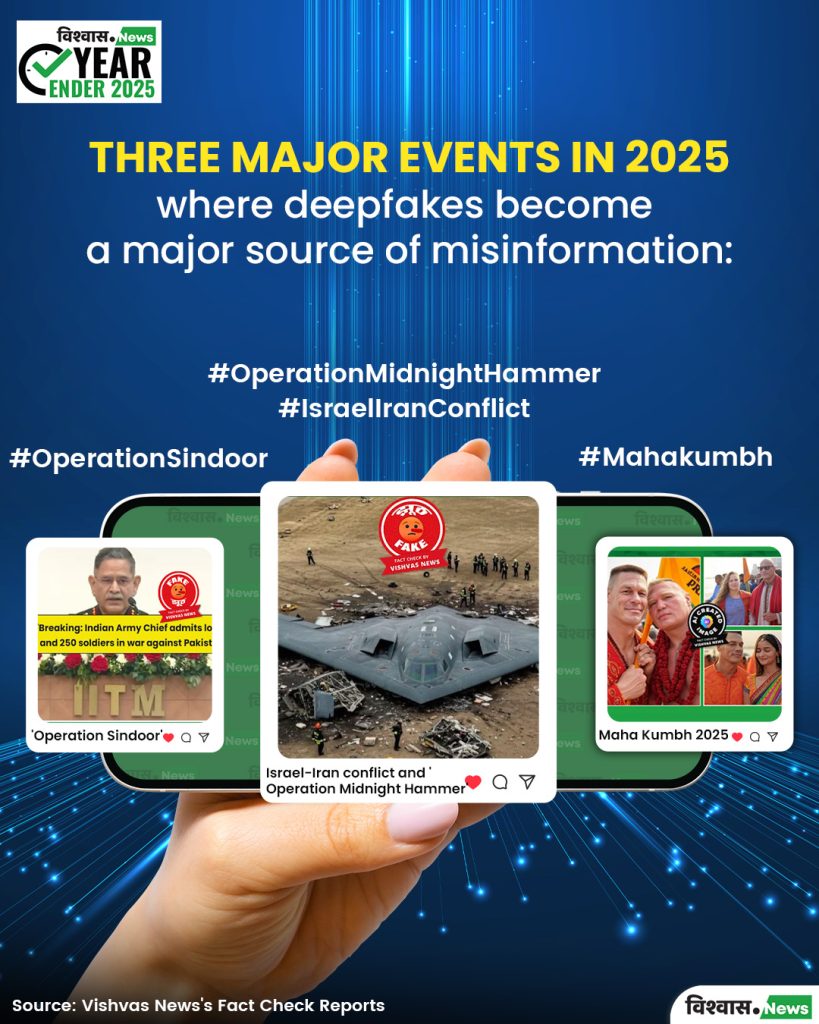
In response to the terrorist attack in Pahalgam, Jammu and Kashmir, India carried out military operations under ‘Operation Sindoor‘, targeting terrorist hideouts in Pakistan and Pakistan-occupied Kashmir (PoK). It mainly lasted from May 7 to May 10, 2025, after which Pakistan appealed for a ceasefire, and later a ceasefire was announced on May 10, 2025.
There was a wave of misinformation on social media regarding this military operation, in which Pakistan resorted to well-planned propaganda against India, and deepfake multimedia was prominent in it.Google Trends‘ 2025 analysis shows that this topic has been trending since May, and so the trend of spreading misinformation around this campaign continues from May till December.
In November and December, deepfake videos, primarily of the Army, Navy, and Air Force chiefs, were shared to spread anti-India propaganda. These videos claimed Pakistan’s alleged advantage in the military operation.
According to a report in the Indian Express, “The central government issued nearly 2,300 blocking orders to 19 social media platforms through the Sahyog portal between October 2024 and October 2025. This period also includes orders issued during Operation Sindoor, in which the government blocked handles operating from Pakistan to counter online propaganda.”
Not only this, during this time, Pakistani users shared deepfake videos of the Indian Prime Minister, Home Minister and Foreign Minister and made the fake claim that India has accepted its defeat in this conflict. During this period, Pakistan targeted Urdu-speaking users in India, attempting to spread hatred, sow confusion, and undermine the social fabric. An analysis of the multimedia used to achieve this can be read here. Additionally, fake claims about damage to Pakistan and the alleged leak of nuclear radiation in Pakistan after India’s action were also shared.
Deepfakes become a medium of misinformation in the Israel-Iran conflict
The proxy conflict between Iran and Israel escalated into a direct military conflict when Israel attacked Iran on June 13, 2025, and Iran retaliated, followed by the US launching Operation Midnight Hammer, targeting Iran’s nuclear enrichment facilities.
Although this operation was not directly related to India, attempts were made to implicate India in the conflict through deepfakes spread on social media. During the operation, it was claimed that India allowed US fighter jets (B2 bombers) to use its airspace, a completely false and baseless claim. Misinformation related to the conflict was also shared on social media during this period, primarily through AI-generated multimedia.
Maha Kumbh
The Maha Kumbh Mela was held in 2025, and based on available fact-check reports, three types of misinformation had emerged. The first category was celebrity deepfakes, where AI-created images of celebrities were shared, claiming they bathed in the Sangam.
The second category included communally sensitive content (including the capture of a terrorist disguised as a sadhu) and claims related to the stampede at the Maha Kumbh Mela, in which fake claims were made by sharing images and videos from different countries and other events.
Meanwhile, the third category involved the use of false and unrelated multimedia in the name of events related to the preparations for the Maha Kumbh and its conclusion, exaggerating these events. For example, claims about the Air Force forming a ‘Trishul Formation’ on the final day of the Maha Kumbh, or about a ‘grand’ fireworks display during the conclusion.
Deepfake trends in 2025
As in previous years, in 2025, the scope of deepfakes was not limited to the political sphere and political propaganda, but also encompassed the economic, social, and entertainment sectors. Three key AI-related trends emerged: the use of deepfake audio and video for political propaganda, financial misinformation (including cyber fraud), and health misinformation.
2025 was a year of elections. The Delhi Assembly elections were held in February, followed by the Bihar Assembly elections at the end of the year. In addition, the Vice Presidential election was held, along with by-elections for vacant assembly seats in several states. However, electoral misinformation was primarily seen during the Delhi and Bihar assembly elections, where deepfake multimedia also played a prominent role.
During the Bihar Assembly elections, videos of rallies by BJP and JDU leaders were manipulated using AI to add the slogan ‘Vote thief, leave the throne’. Furthermore, the issue of EVM manipulation and tampering with election results was also at the centre of misinformation.
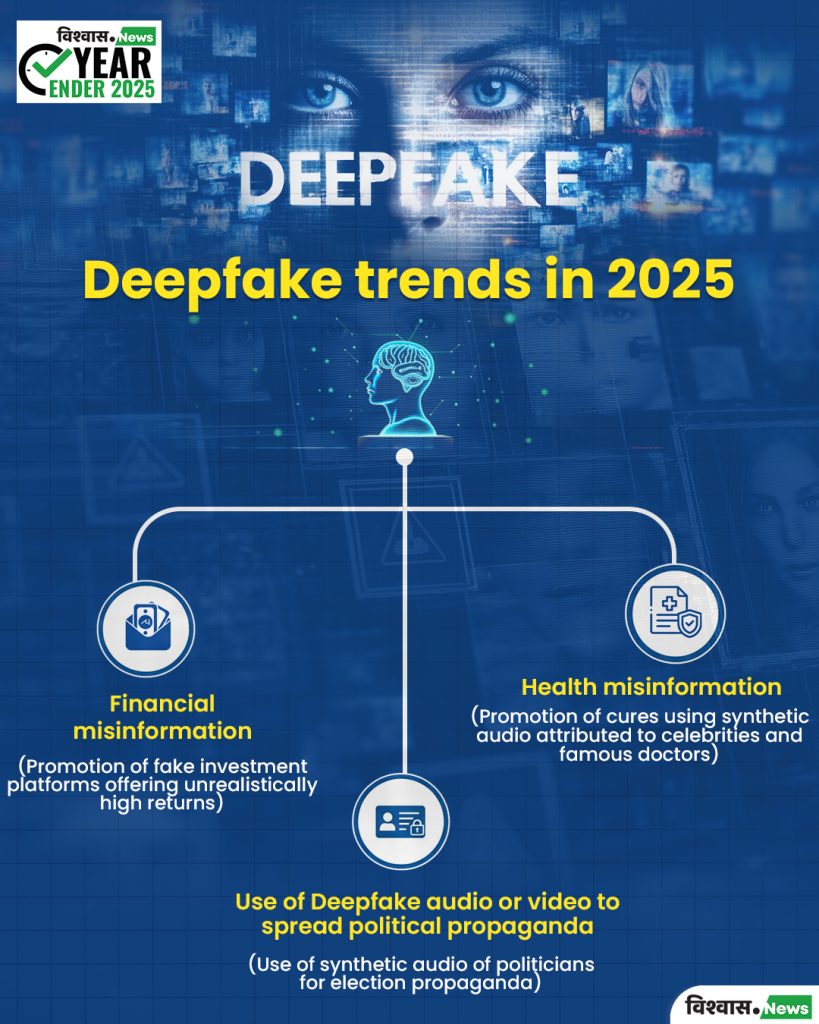
Deepfake audio or video was used for political propaganda during elections. However, the number was not significant. In the financial misinformation category, synthetic audio was used, primarily featuring the voices of major corporate leaders, promising extraordinary returns.
At the same time, misleading and inaccurate health information not only impacts people’s health but also causes significant economic damage. In India, AI is being used to identify doctors using their faces and voices (Dr Naresh Trehan or Dr Deepfakes of Devi Shetty are used to exaggerate the effectiveness of counterfeit medicines. Cybersecurity companies have reported that these ‘miracle cure’ advertisements can even lead to financial losses.
What do the statistics say about fake/false news?
Like other countries in the world, India also does not have any specific law or regulation to deal with fake news; however, several relevant sections of the IPC (Indian Penal Code and now Bhartiya Nyay Sanhita BNS) and the IT Act are used for legal action in cases related to fake news and misinformation.
Sections 67, 69, and 79 of the IT Act, 2000, Section 54 of the Disaster Management Act, 2005, and the Digital Personal Data Protection Act, 2023, along with sections of the BNS (formerly the Indian Penal Code), provide provisions for taking action against individuals’ data misuse on online platforms. The DPDP Act is being implemented in India in a phased manner.
The National Crime Records Bureau (NCRB) registers cases related to spreading false/fake news/rumours under Section 505 of the Indian Penal Code. According to the NCRB’s 2023 annual report, ‘Crime in India’, a total of 1087 cases of false or fake news were registered in 2023, an increase of approximately 27% compared to 2022.
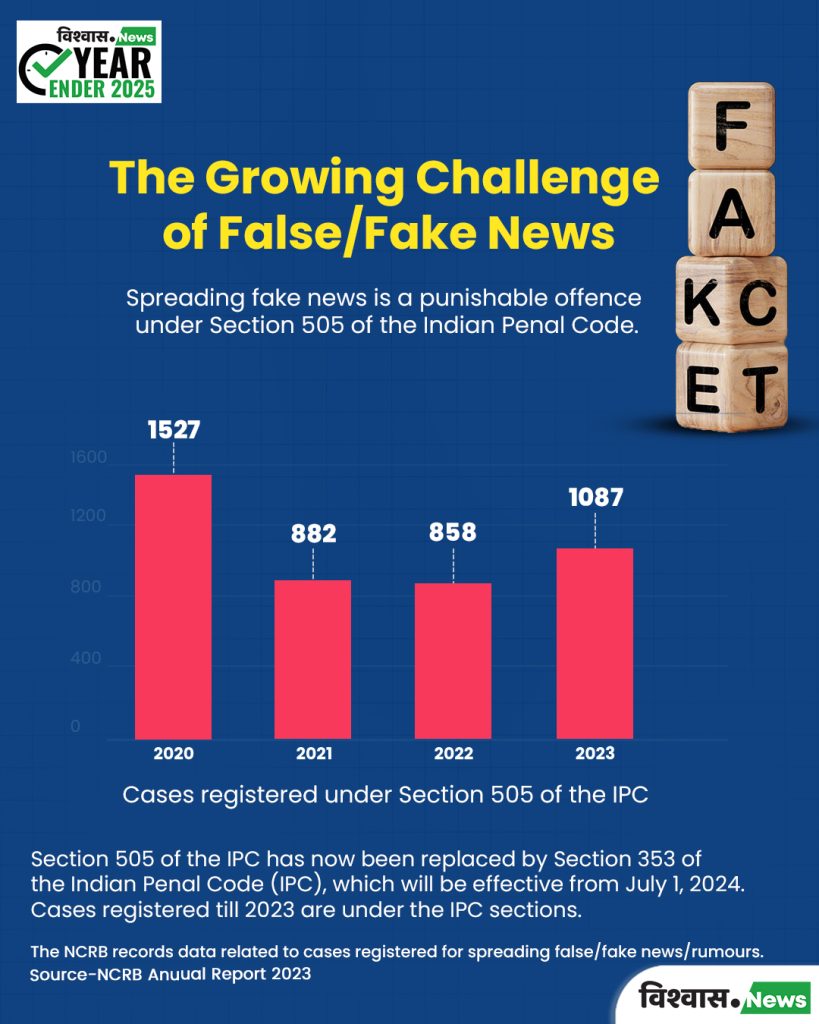
According to the NCRB’s 2022 annual report, ‘Crime in India’, a total of 858 cases were registered for spreading fake news in 2022, a decrease compared to the previous two years. A total of 1527 such cases were registered in 2020, while 882 such cases were registered in 2021. Compared to 2022, 2023 saw an increase in cases of false or fake news in India.
A series of AI conferences and a consensus on the seriousness of the deepfake threat
However, 2025 was unique compared to previous years, as it saw the convening of several important global and technical conferences, focusing on the regulation, safety, and development of AI. In February, the AI Action Summit was held in Paris, France, to discuss the establishment of global standards for safe, trustworthy, and inclusive AI. France and India co-chaired the conference, which was also attended by Prime Minister Narendra Modi.
Before PM Modi arrived in Paris for the conference, President Macron, in an interview with a website, stressed the need to work together towards ‘technological sovereignty’, saying India and France are leading; however, the US and China are far ahead of us. We would like to work together on AI. We also want to take advantage of new technology, but we want it to happen in India as well.”
In October 2025, an AI Policy Conference was held in Zurich, Switzerland, focusing on AI regulation and public policy. Furthermore, several similar conferences were held in other countries around the world, including India, and the issue of deepfakes figured prominently in all of these conferences, with a consensus emerging that deepfakes pose a ‘serious risk’to the credibility of elections and social harmony, especially in democratic countries, as evidenced by the World Economic Forum report cited above.
At an event in November 2023, Prime Minister Narendra Modi also spoke about the challenge of deepfakes, calling it a major threat to both society and democracy, and stressed the need for technology platforms to develop mechanisms to identify and quickly remove deepfake content.
Following Prime Minister Modi’s public appeal, the Government of India has made significant and stringent changes to the existing Information Technology (Guidelines for Intermediaries and Digital Media Ethics Code) Rules, 2021 (IT Rules, 2021), to address deepfakes and misleading content. These changes specifically emphasise accountability for intermediaries, including requiring social media platforms to remove deepfakes or objectionable content within 36 hours of receiving a complaint.
What will happen in 2026?
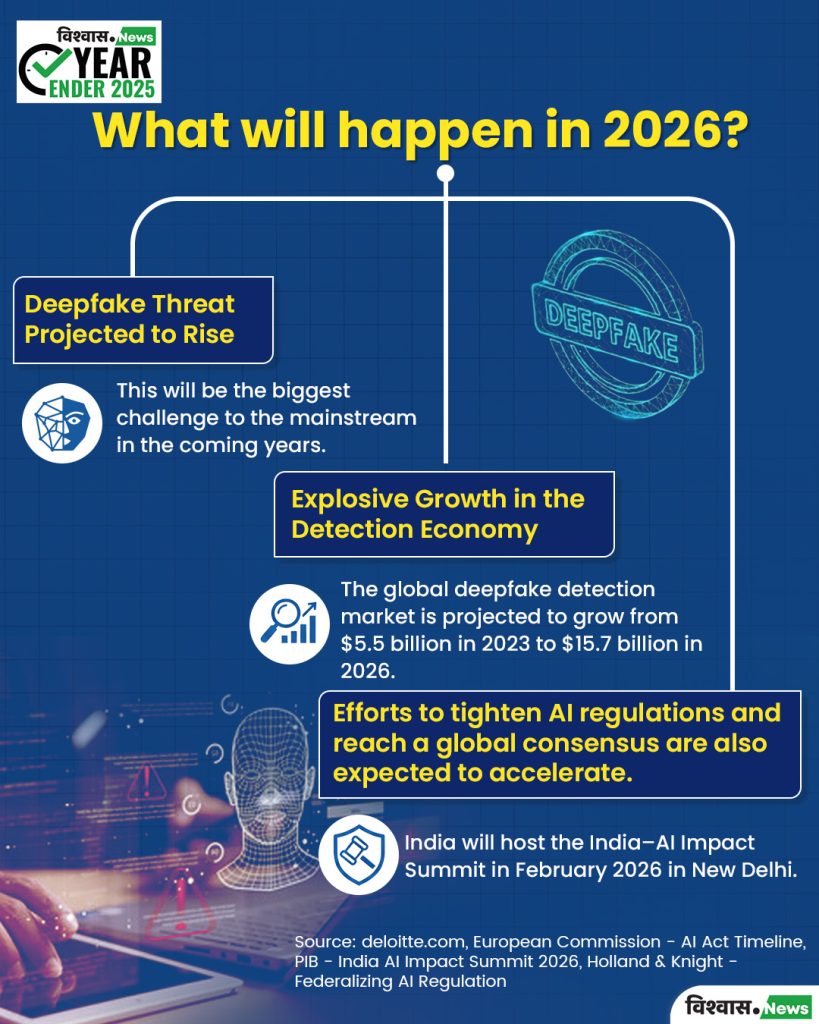
Based on experiences and projections, 2025 is poised to be a pivotal year for AI regulation. Even as the deepfake threats are expected to increase in 2026, concerted efforts to combat them will intensify, driving the expansion of the detection economy. Furthermore, efforts to tighten AI regulation and build global consensus are expected to accelerate. Existing laws will be enforced rigorously, alongside the development of a framework for new regulations.
The year 2025 clearly demonstrates that misinformation and disinformation have become not just a social issue, but a national security, economic, and democratic threat. In India, based on an analysis of viral claims, available news, and fact-check reports, this threat is manifest on three fronts: deepfake videos have been used to spread anti-India propaganda, even in sensitive military operations, such as national security and geopolitical ones, demonstrating that synthetic media has now become an integral part of hybrid warfare.
Deepfakes and manipulated media were used for political propaganda in the assembly elections of Bihar and other states, creating doubts among voters about the credibility of the elections. Third, the resulting financial losses, which would not be an exaggeration to describe as an economic ‘tsunami’.


Know the truth! If you have any doubts about any information or a rumor, do let us know!
Knowing the truth is your right. If you feel any information is doubtful and it can impact the society or nation, send it to us by any of the sources mentioned below.